

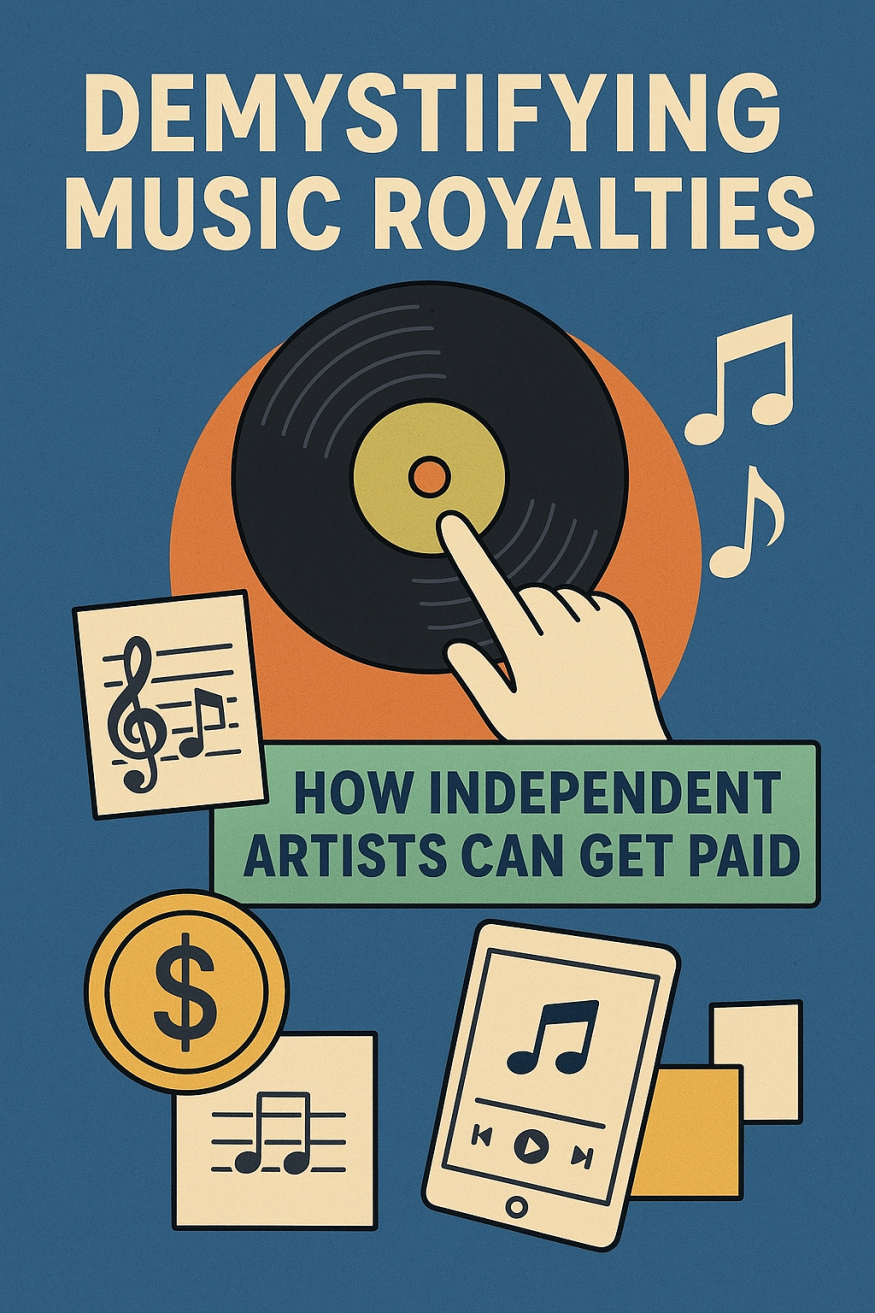
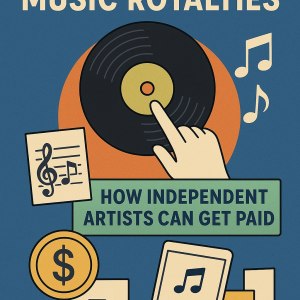
Getting Paid: A Guide to Music Royalties for Independent Artists
October 10, 2025 - 09:48 PM - 273views
Written by Indie By Nature Staff | Published: October 10, 2025
If you're an independent artist grinding in the studio, performing at showcases, or dropping your latest single on Spotify, you're already putting in the work. But here's a hard truth that doesn't get talked about enough: you might be leaving money on the table if you don't understand how royalties work or how to collect them.
Let's make this simple and talk about how you can make sure every play, stream, and spin puts something in your pocket.
What Music Royalties Really Mean
A royalty is the money you earn when your music gets used, whether someone streams it, buys it, plays it on the radio, or syncs it in a movie. According to Investopedia (2024), royalties are payments made to creators for the right to use their intellectual property. In our world, that means your beats, your lyrics, your vocals: your art.
Every time your song moves through the world, it's generating different types of income. Mechanical royalties come from reproductions, like digital downloads and streams. Performance royalties are earned when your song is played in public, whether on the radio, at a concert, or in a restaurant. Sync royalties are what you get when your music is placed in TV shows, movies, or ads. Even though print royalties (for sheet music and lyrics) are less common these days, they still exist.
Each one of these is part of the ecosystem that helps you get paid for your creativity. The key is knowing where that money flows and making sure your name is attached to it.
How to Actually Get Paid
Getting paid for your art starts with being registered in the right places. If you're not signed up with a Performance Rights Organization, or PRO, you're already missing out. The major ones in the U.S. are ASCAP, BMI, and SESAC. They collect your performance royalties whenever your music is played publicly or streamed. Signing up is quick: you just create an account on their website and start registering your songs.
Then there's The MLC (Mechanical Licensing Collective). They handle your mechanical royalties from streaming services like Spotify, Apple Music, and Amazon. It's completely free to register, and you can get started at themlc.com.
Don't forget about SoundExchange, which collects digital performance royalties for when your recordings are streamed on digital radio platforms like Pandora, iHeartRadio, and SiriusXM. If you're the recording artist or label owner, you'll want to be in their system too.
Once you're registered with these organizations, you're no longer guessing where your money's going: you're collecting it.
Publishing vs. Copyright: What's the Difference?
This is where a lot of artists get confused, but it's really not that complicated. Copyright is your proof of ownership. It protects your music under the law: your lyrics, your melody, your composition. You can register your works officially through the U.S. Copyright Office at copyright.gov.
Publishing, on the other hand, is the business of monetizing that ownership. It's what ensures you're actually getting paid when your copyrighted songs earn royalties. If copyright is the title to your house, publishing is the person renting it out and collecting the rent checks.
As an indie artist, you can either self-publish and collect everything yourself, or you can work with a publishing company that helps you manage and collect royalties worldwide. Both paths work: it's about what fits your goals and how much control you want to maintain.
Protecting Yourself and Your Art
Your creativity is your currency, so protecting it isn't optional: it's part of being professional. Always register your songs with the Copyright Office to legally lock in your ownership. Make sure you've joined a PRO and The MLC so every stream, spin, and live performance pays you what you're owed.
Keep good records of who you collaborate with, agree on song splits before you hit the studio, and put it in writing. And when it comes to contracts, don't rush them. Read everything. If something doesn't feel right, talk to a music lawyer or consultant. There's power in understanding what you're signing.
Owning Your Indie Future
Being an indie artist doesn't mean you have to do everything alone. It means you're building something real on your terms. Understanding royalties, publishing, and copyright isn't about becoming a lawyer; it's about protecting your bag and your legacy.
You've already invested your time, energy, and talent into your music. Make sure you're not giving the business side away for free. Register your work, claim your royalties, and learn how your art earns, because every stream, show, and sync should be working for you.
You deserve to get paid for what you create. After all, if your music moves people, it should move money too. ????
Sources:
- Investopedia. (2024). Royalty definition. Retrieved from https://www.investopedia.com/terms/r/royalty.asp
- The Mechanical Licensing Collective. (2024). Get started. Retrieved from https://www.themlc.com/get-started
- Indie Music Academy. (2024). Music royalties explained. Retrieved from https://www.indiemusicacademy.com/blog/music-royalties-explained
- U.S. Copyright Office. (2024). Musicians & copyright. Retrieved from https://www.copyright.gov/engage/musicians/
Log in Sign up